Dealing with acne can be frustrating, especially when it affects your confidence and makes simple tasks like choosing the right skincare products overwhelming. Luckily, achieving clear, glowing skin is possible with the right approach. By following a consistent acne skin care routine, you can reduce breakouts, calm inflammation, and support your skin’s natural healing process. In this article, we will walk you through simple yet effective steps that fit easily into your daily life, so you can enjoy healthier, more radiant skin without feeling overwhelmed.
Understanding Acne and Your Skin Type
To manage acne effectively, it helps to know what causes it and how your skin type plays a role. Hormonal changes, stress, and diet can all trigger breakouts by increasing oil production or inflammation. Oily skin is more prone to blackheads and whiteheads, while dry skin can get irritated easily, sometimes worsening acne. Combination skin requires a balanced approach, as some areas may be oily and others dry. Understanding these factors makes it easier to choose the right products and care for your skin properly.
Daily Acne Skin Care Routine
Morning Routine
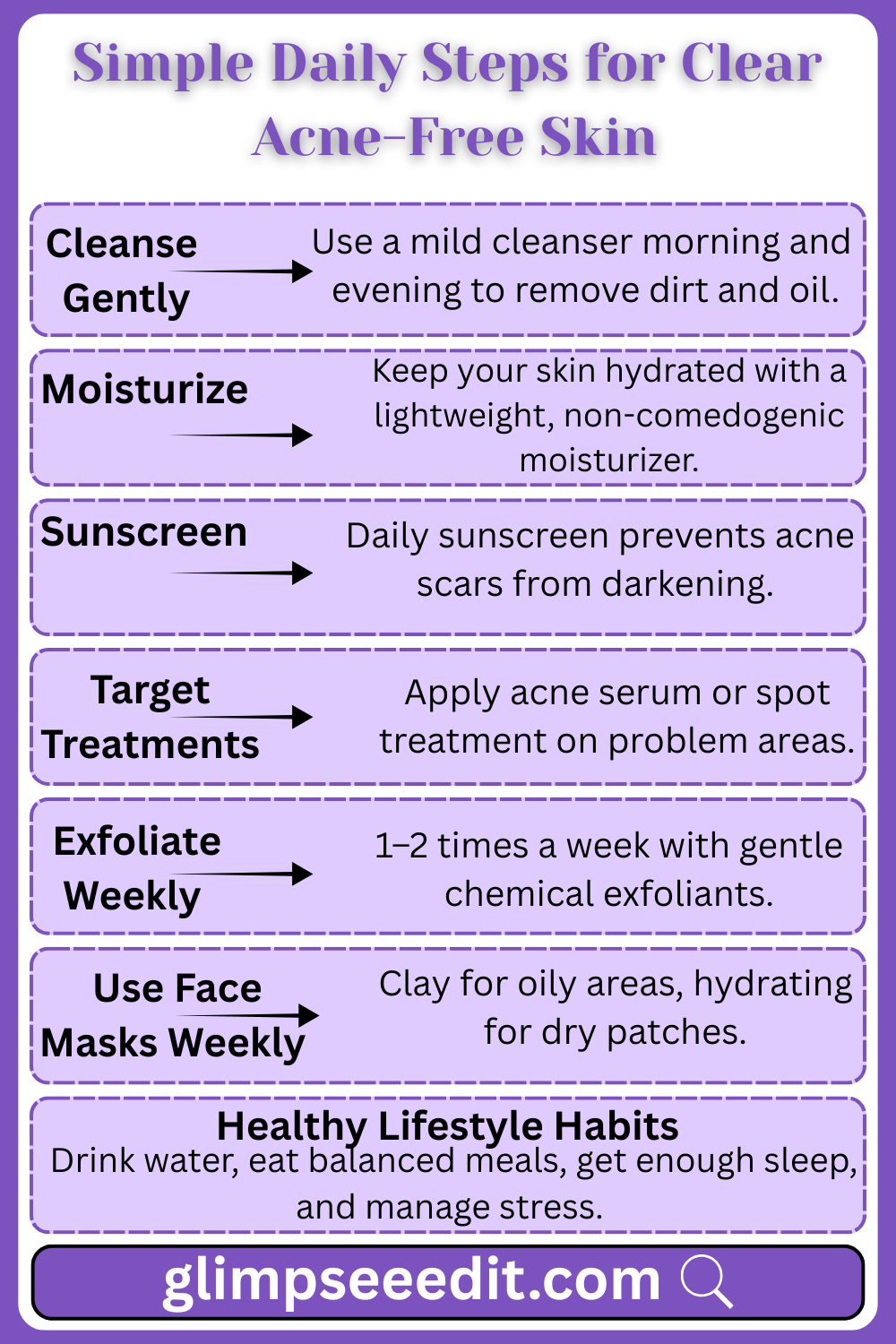
- Start with a gentle cleanser to remove oil and impurities that build up overnight. This helps prevent clogged pores without irritating your skin.
- Follow with a lightweight moisturizer to keep your skin hydrated and balanced throughout the day. Even acne-prone skin needs moisture to stay healthy.
- Finish with sunscreen to protect your skin from UV damage, which can worsen acne scars and redness.
Evening Routine
- Cleanse your face again to wash away dirt, sweat, and makeup collected during the day. Using a gentle cleanser prevents irritation and dryness.
- Apply a targeted acne treatment or serum on problem areas to reduce breakouts and support healing.
- End with a nourishing moisturizer to restore your skin’s natural barrier and keep it calm overnight.
By sticking to these simple steps every day, your skin gradually becomes clearer, calmer, and healthier. Even small, consistent habits can make a noticeable difference over time.
Weekly Additions
Adding a few extra steps to your routine once or twice a week can help keep acne under control and improve your skin’s overall texture.
- Exfoliation:
Gently exfoliating helps remove dead skin cells and prevent clogged pores. Chemical exfoliants, like those with salicylic acid or glycolic acid, work by dissolving buildup without scrubbing, making them ideal for acne-prone skin. Physical exfoliants, such as scrubs, can be harsher and may cause irritation, so use them sparingly if at all. - Face Masks:
Using a mask once a week can calm inflammation and support your routine. Clay masks are great for absorbing excess oil, while hydrating masks help prevent dryness that can make acne worse. Choose a mask suited for your skin type and always follow up with a gentle moisturizer.
By incorporating these weekly additions carefully, you give your skin extra support without overloading it, helping to maintain a healthier, clearer complexion over time.
Common Mistakes to Avoid
Even with the best intentions, some habits can make acne worse or slow down your progress. Being aware of these common mistakes can help you protect your skin.
- Over-cleansing: Washing your face too often or using harsh cleansers can strip your skin of natural oils, causing dryness and irritation. This may trigger more breakouts instead of preventing them.
- Using harsh products: Strong acne treatments or skincare products not suited for your skin type can damage your skin barrier. Always choose gentle formulas and introduce new products gradually.
- Popping pimples: It might be tempting, but squeezing or picking at acne can lead to scarring, infection, and longer healing times. Instead, focus on consistent care and let treatments do their work.
By avoiding these mistakes and following a thoughtful routine, your skin can heal more efficiently and stay calmer over time.
FAQs about Acne Skin Care Routine
How long does it take to see results from an acne skin care routine?
Results vary depending on your skin type and the products you use, but most people start noticing improvements within 4 to 6 weeks. Consistency is key, so stick to your routine and avoid switching products too frequently.
Can I use makeup while following an acne skincare routine?
Yes, but it’s important to choose non-comedogenic, oil-free makeup products. Always remove makeup thoroughly at the end of the day to prevent clogged pores and breakouts.
How often should I exfoliate if I have acne-prone skin?
For acne-prone skin, 1–2 times a week is usually enough. Over-exfoliating can irritate your skin and worsen acne, so gentle chemical exfoliants are often preferred over harsh scrubs.
Are natural remedies effective for acne?
Some natural ingredients like tea tree oil or aloe vera can help calm inflammation, but they should complement, not replace, a consistent skincare routine. Always patch test before trying new remedies.
Can diet affect acne?
Yes, diet can play a role. Foods high in sugar, dairy, or processed items may trigger breakouts in some people. Staying hydrated and eating a balanced diet with fruits, vegetables, and whole grains can support healthier skin.
Conclusion
Managing acne doesn’t have to be complicated or overwhelming. By following a consistent acne skin care routine and incorporating simple weekly steps like gentle exfoliation and masks, you can gradually achieve clearer, healthier, and more radiant skin. Remember to avoid common mistakes like over-cleansing or picking at pimples, and support your routine with good lifestyle habits such as a balanced diet, enough sleep, and stress management. With patience and consistency, your skin can improve over time, giving you the confidence and glow you deserve.