
Choosing what to wear each day may seem simple, yet the colors you select can greatly influence how your outfit looks and feels. As the seasons change, the environment, weather, and even our mood shift, which is why certain shades naturally feel more suitable at different times of the year. For this reason, understanding the best colors for each season can make styling outfits much easier and more balanced. In addition, the right colors can instantly elevate even the simplest look, helping your wardrobe appear more thoughtful, fresh, and stylish throughout the year.
Table of Contents
ToggleBest Colors for Spring
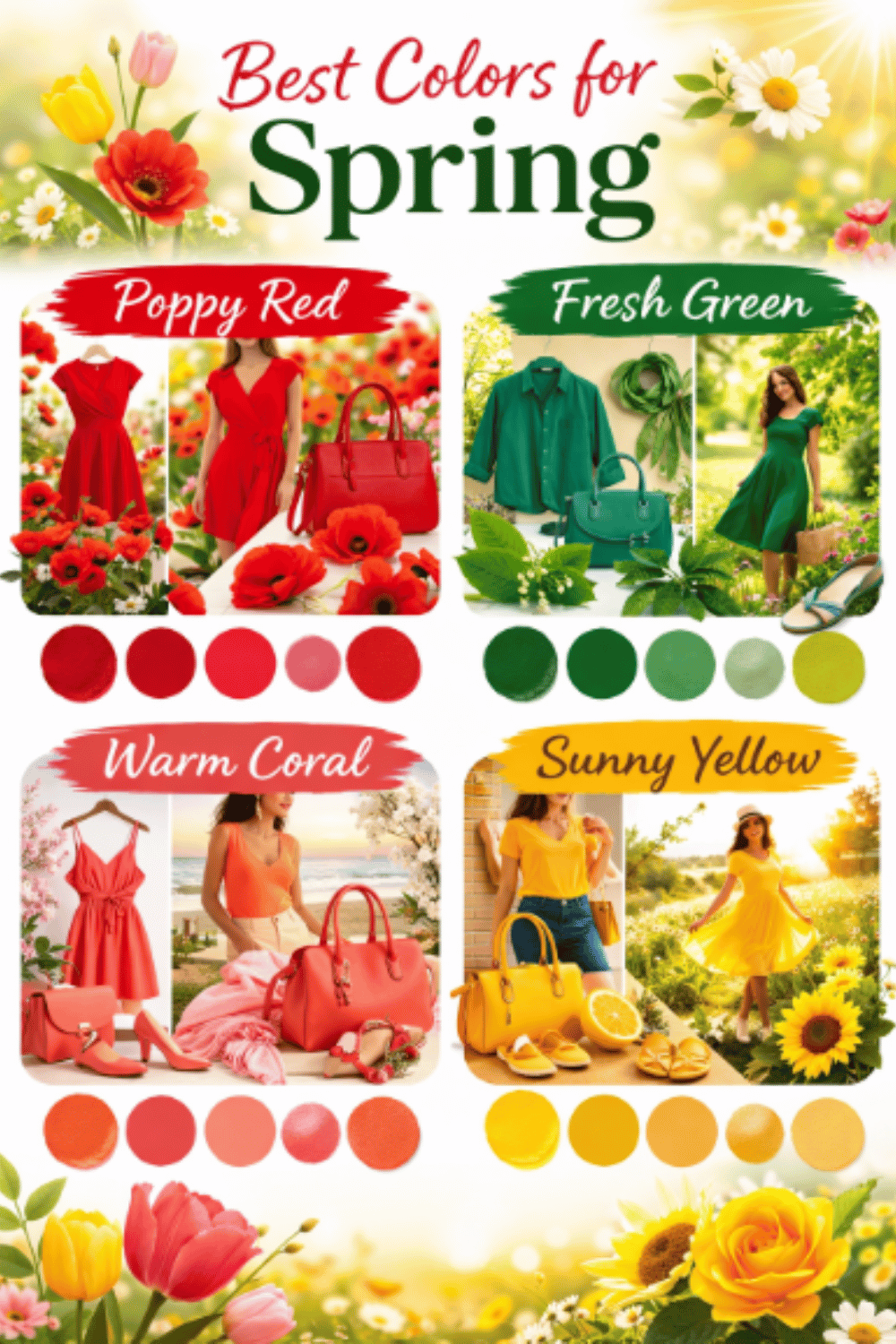
Spring is a season that naturally feels fresh, lively, and full of color. As flowers begin to bloom and the weather becomes warmer, clothing choices often shift toward brighter and more cheerful shades. For this reason, spring fashion usually focuses on colors that feel light, energetic, and inspired by nature. Instead of dark or heavy tones, people often prefer shades that reflect the season’s vibrant atmosphere.
Some of the most flattering spring shades include:
-
poppy red: A bright and lively shade that instantly adds energy to spring outfits.
-
fresh green: Inspired by new leaves and nature, this color feels refreshing and balanced.
-
warm coral: A soft yet vibrant tone that brings warmth and works beautifully with light fabrics.
-
sunny yellow: A cheerful color that reflects the brightness and optimism of spring days.
Best Colors for Summer
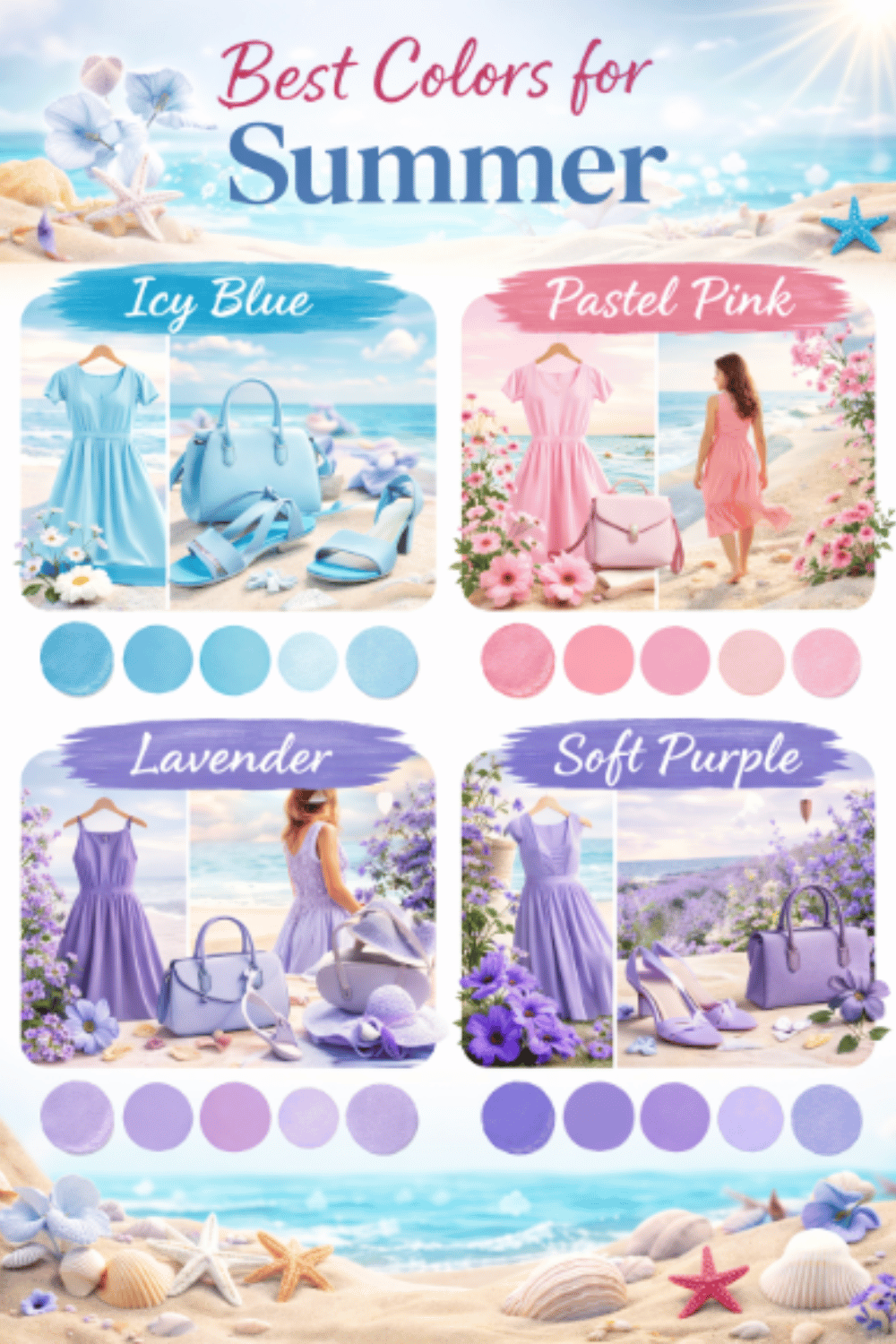
Summer is the season for light, breezy, and calming colors that reflect the soft glow of sunny days and the relaxing vibe of the beach. Unlike the bright and energetic shades of spring, summer tones tend to be cooler and gentler, creating a sense of freshness and ease in your outfits. These colors work well with lightweight fabrics and effortless styles, helping you stay stylish while feeling comfortable in the heat.
Some of the most flattering summer shades include:
-
Icy blue: A cool, refreshing color that mirrors clear skies and ocean waves, perfect for keeping outfits light and airy.
-
Pastel pink: Soft and delicate, this shade adds a gentle, feminine touch without feeling overpowering.
-
Lavender: Subtle yet elegant, lavender brings a calm, soothing energy to summer wardrobes.
-
Soft purple: A muted tone that complements lighter fabrics and pairs beautifully with neutral or pastel shades.
These colors not only match the season’s mood but also make it easy to mix and match pieces for a cohesive, stylish summer look.
Best Colors for Autumn
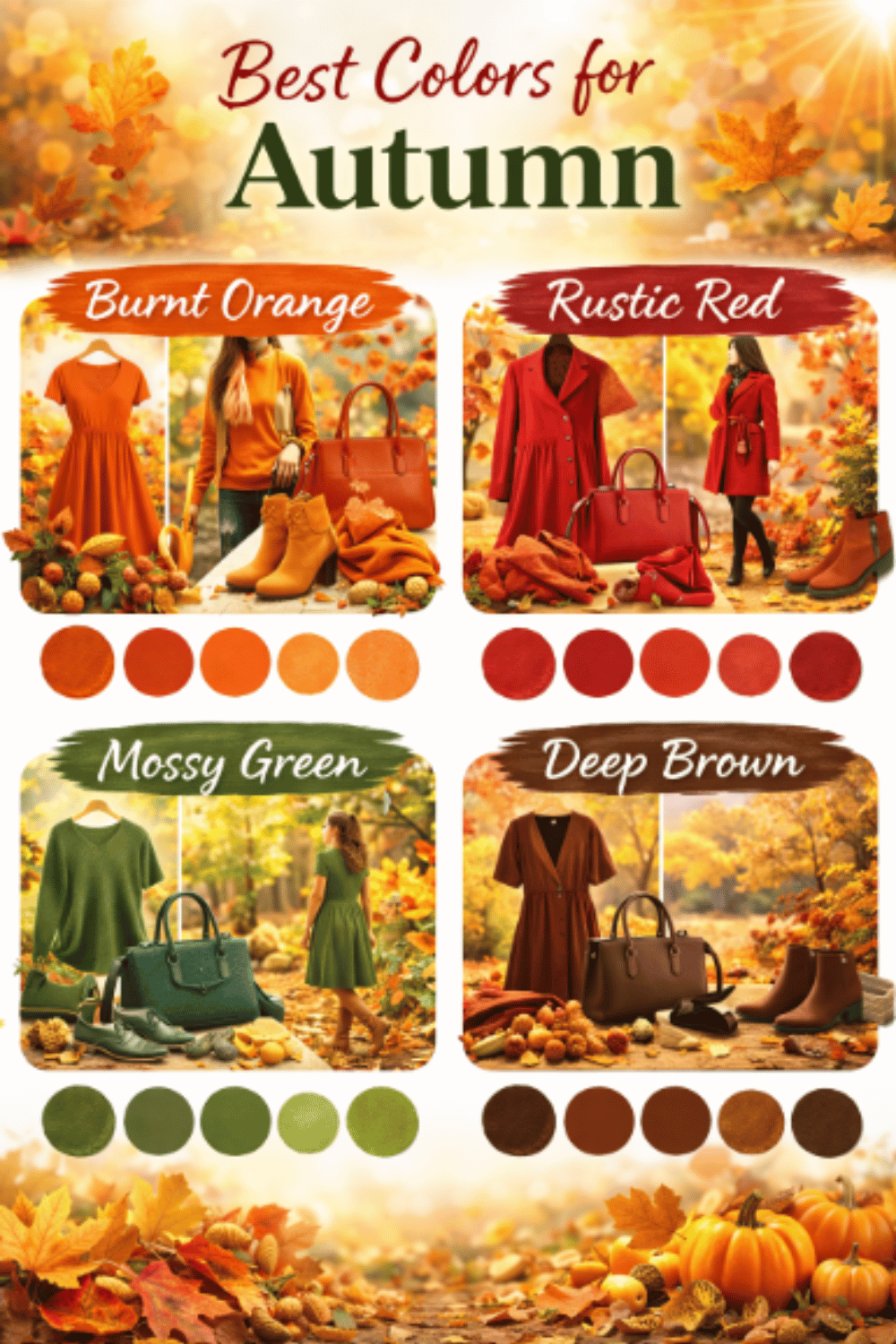
Autumn is the season of warmth, cozy vibes, and nature’s rich transformation. As the leaves turn and the air cools, outfits naturally shift toward colors that feel grounded, earthy, and comforting. Unlike the bright energy of spring or the soft pastels of summer, autumn tones are deeper and more muted, which makes them perfect for layering and creating stylish, seasonal looks.
Some of the most flattering autumn shades include:
-
Burnt orange: A warm and vibrant tone that echoes falling leaves and adds a cozy touch to any outfit.
-
Rustic red: Deep and earthy, this shade brings richness and elegance while still feeling approachable.
-
Mossy green: A natural, muted green that reflects autumn foliage and pairs beautifully with browns and neutrals.
-
Deep brown: A classic, grounding color that complements the season’s palette and works well in layers or accessories.
These colors not only capture the essence of autumn but also make it easy to build stylish outfits that feel both seasonal and timeless.
Best Colors for Winter
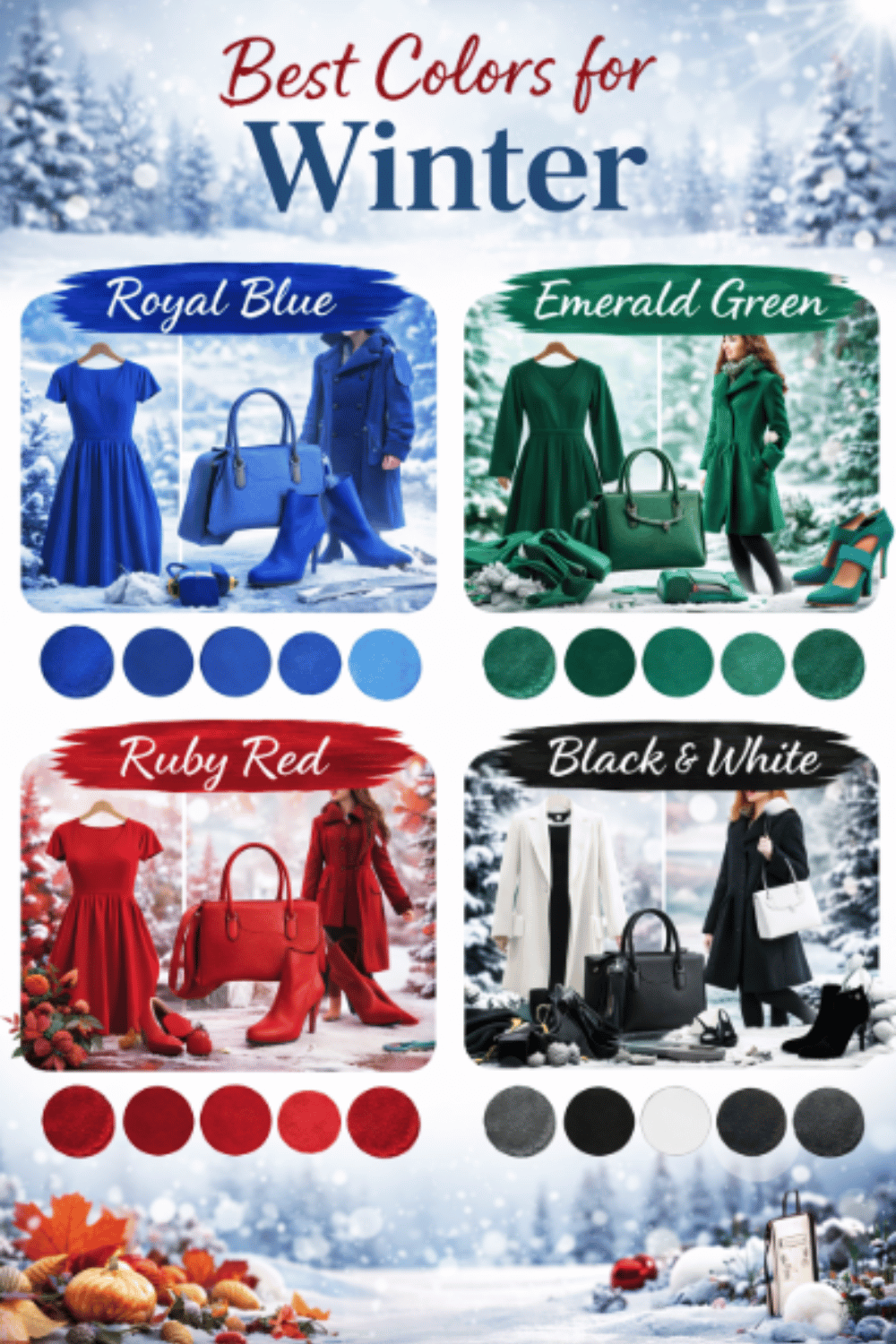
Winter is the season of contrast, elegance, and dramatic tones. As the days grow shorter and the weather turns cooler, outfits often shift toward deeper, bolder colors that reflect the crisp, striking beauty of the season. Unlike the soft pastels of summer or the warm earthy hues of autumn, winter colors create a sense of sophistication and make your wardrobe feel polished and intentional.
Some of the most flattering winter shades include:
-
Royal blue: A rich and striking color that adds depth and pairs beautifully with neutrals or metallics.
-
Emerald green: A jewel tone that feels luxurious and festive, perfect for both casual and formal outfits.
-
Ruby red: Bold and elegant, this shade instantly draws attention and adds warmth during cold months.
-
Black and white: Timeless classics that create high-contrast looks, making winter outfits feel chic and versatile.
By incorporating these shades, you can easily create winter looks that feel both stylish and seasonally appropriate, while effortlessly standing out in any setting.
FAQs about Best Colors for Each Season
Why are seasonal colors important in fashion?
Seasonal colors help you choose shades that naturally match the time of year, enhancing your outfits and mood. By following the best colors for each season, your wardrobe feels more intentional and visually appealing.
Can I mix seasonal colors from different seasons?
Yes, but with care. For example, pairing a spring pastel with a subtle summer shade can work, as long as the tones complement each other. This approach keeps your style fresh while staying cohesive.
How do I know which seasonal color suits me best?
Consider your skin tone, hair color, and personal style. While the best colors for each season provide a guide, experimenting with shades helps you find what enhances your natural features and feels comfortable.
Are seasonal colors only for clothes?
Not at all. Seasonal colors can extend to accessories, shoes, handbags, and even makeup, helping you create a fully coordinated look that reflects the season’s vibe.
Do seasonal colors change every year?
No, seasonal colors are generally consistent because they reflect nature and the year’s climate patterns. However, fashion trends may introduce slight variations each year, so it’s good to mix timeless colors with trendy pieces.
Final Thought
Knowing the best colors for each season makes your wardrobe look fresh and stylish all year. Choosing shades that match the season helps you mix and match easily while showing your personal style with confidence.