Blush may seem like a small step in your makeup routine, but it has the power to completely transform your overall look. Applied correctly, it adds a soft, healthy glow that brightens your face and makes your features stand out. For beginners, however, achieving the perfect blush can feel tricky. Mistakes like choosing the wrong shade or applying too much product often go unnoticed, yet they can affect the final result. This is why understanding the common blush mistakesbeginners make is so important. Once you know what to avoid, using blush becomes much easier, allowing you to create a balanced, polished, and natural-looking makeup finish.
Blush is a simple but powerful makeup product designed to add color and dimension to your cheeks. Beyond just color, it brings warmth to your complexion, giving your face a healthy, radiant appearance. Unlike foundation or concealer, which even out skin tone, blush highlights your natural features and adds a subtle glow that enhances your overall look.
When placed correctly, it can accentuate cheekbones, soften the jawline, and create a harmonious facial balance. Choosing the right shade and applying it in the proper area can complement both your skin tone and your outfit, resulting in a polished, effortless appearance. In short, blush is a small detail with a big impact, helping you achieve a natural, luminous finish every time.
Common Blush Mistakes Beginners Make
1. Using Too Much Product
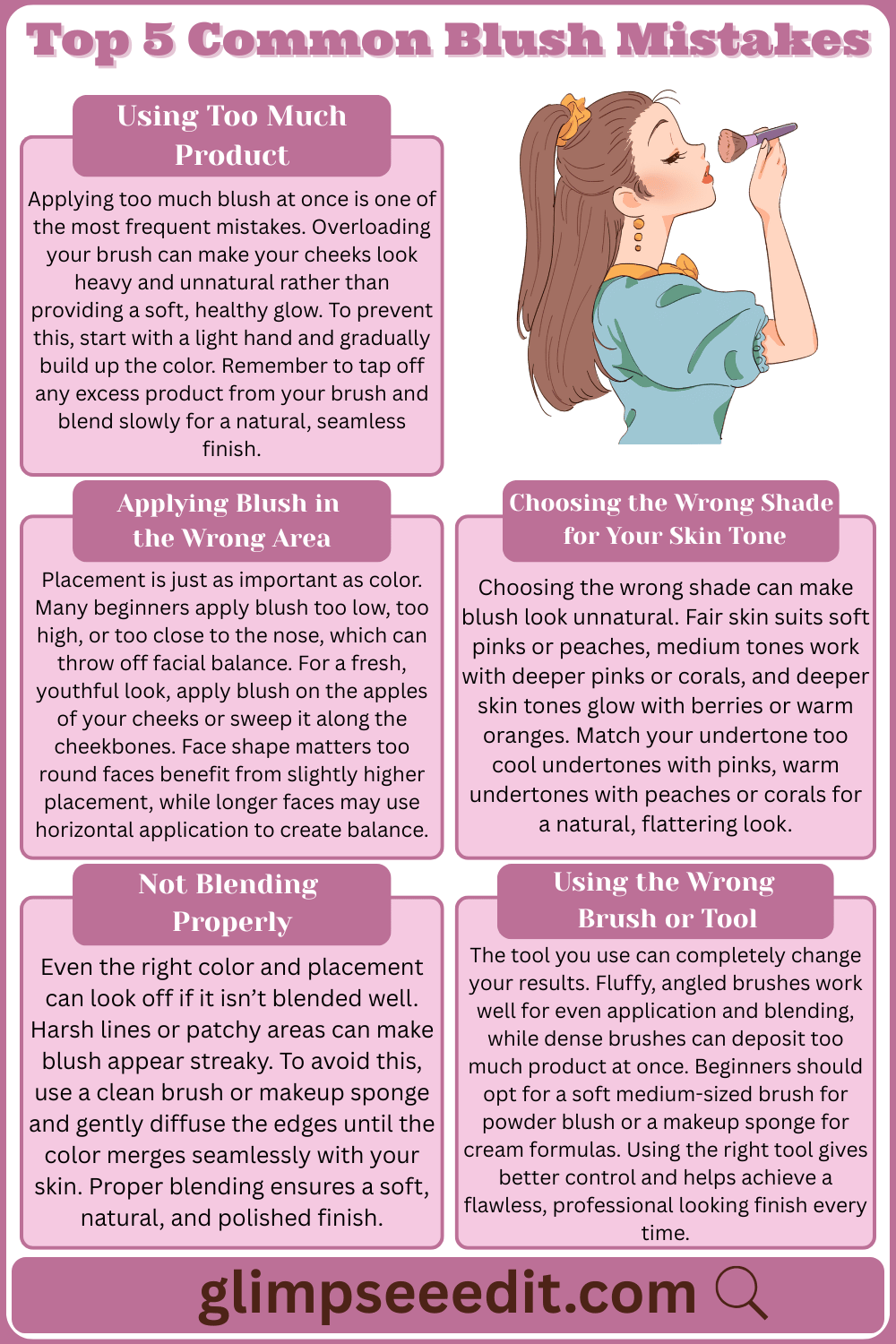
Applying too much blush at once is one of the most frequent mistakes. Overloading your brush can make your cheeks look heavy and unnatural rather than providing a soft, healthy glow. To prevent this, start with a light hand and gradually build up the color. Remember to tap off any excess product from your brush and blend slowly for a natural, seamless finish.
2. Choosing the Wrong Shade for Your Skin Tone
Selecting the wrong shade can make blush stand out for the wrong reasons. Fair skin typically looks best with soft pinks or peaches, medium skin tones suit deeper pinks or corals, and deeper skin tones glow with rich berries or warm oranges. It is equally important to consider your undertone. Cool undertones pair well with pink shades, while warm undertones look better with peachy or coral hues. Picking the right shade ensures your blush enhances your natural beauty instead of clashing with it.
3. Applying Blush in the Wrong Area
Placement is just as important as color. Many beginners apply blush too low, too high, or too close to the nose, which can throw off facial balance. For a fresh, youthful look, apply blush on the apples of your cheeks or sweep it along the cheekbones to sculpt your face. Your face shape also matters—round faces benefit from slightly higher placement, while longer faces may use horizontal application to create balance.
4. Not Blending Properly
Even the right color and placement can look off if it isn’t blended well. Harsh lines or patchy areas can make blush appear streaky. To avoid this, use a clean brush or makeup sponge and gently diffuse the edges until the color merges seamlessly with your skin. Proper blending ensures a soft, natural, and polished finish.
5. Using the Wrong Brush or Tool
The tool you use can completely change your results. Fluffy, angled brushes work well for even application and blending, while dense brushes can deposit too much product at once. Beginners should opt for a soft medium-sized brush for powder blush or a makeup sponge for cream formulas. Using the right tool gives better control and helps achieve a flawless, professional looking finish every time.
How to Fix These Blush Mistakes
Correcting blush mistakes is simpler than it might seem. Begin by applying a small amount of product and gradually building up the color. Testing the shade on your cheeks first can help ensure it complements your skin tone perfectly. Blending is key—use a clean brush or sponge to soften any harsh edges and create a seamless look. Additionally, consider your face shape when placing blush, and choose the right tools depending on whether you are using powder or cream formulas. Following these steps makes it easy to achieve a natural, balanced, and flawless finish every time.
Quick Blush Tips for Beginners
When applying blush, less is always more. Start with a light hand and a small amount of product, and layer gradually to reach the desired intensity. Gently blend the color to avoid streaks or harsh lines, and take your time to see how it enhances your natural features. By applying slowly and blending carefully, you can achieve a fresh, radiant look that feels effortless and polished.
FAQs about Common Blush Mistakes Beginners Make
How much blush is too much?
Start with a light layer and build gradually. Too much blush looks heavy and unnatural.
Can beginners use cream blush?
Yes! Cream blush is forgiving if blended properly. Use fingers or a sponge, and start with a small amount.
Where should I apply blush for my face shape?
Round faces: slightly higher on the cheeks.
Long faces: sweep horizontally.
Heart-shaped faces: focus on the apples of cheeks.
What are the common blush mistakes beginners make?
Applying too much, choosing the wrong shade, wrong placement, poor blending, or using the wrong brush.
How do I fix blush mistakes quickly?
Blend harsh edges with a clean brush or sponge, remove excess with a tissue, and start light.
Can I mix different blush shades?
Absolutely! Layering a soft pink with a subtle peach or coral can add dimension and a natural glow. Just start lightly and blend well so the colors merge seamlessly.
Conclusion
Blush brightens your face and enhances features, but beginners often make small mistakes that affect the final look. Avoid common blush mistakes, pick the right shade, and blend carefully to achieve a natural, radiant finish. Start light, take your time, and enjoy perfecting your makeup.