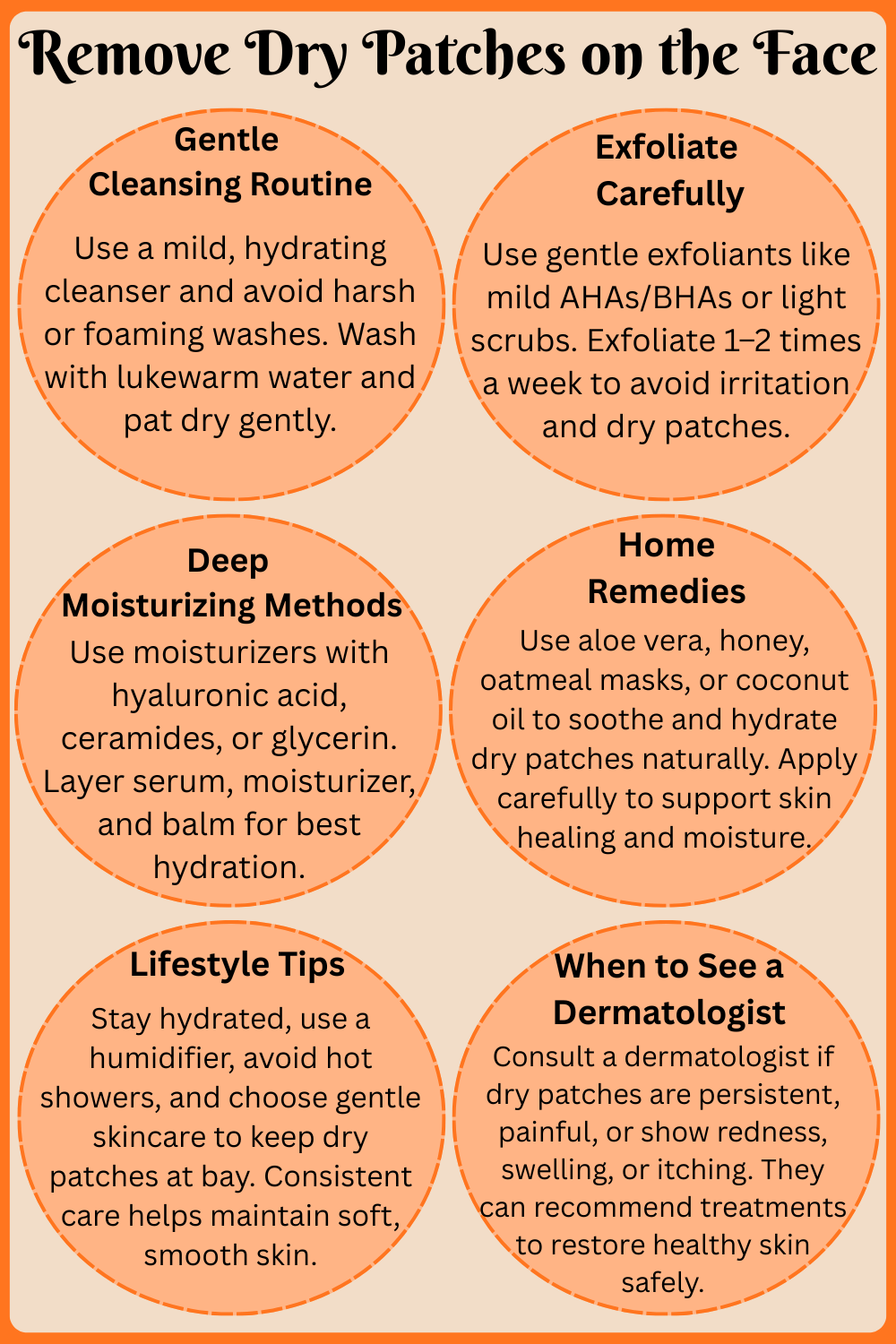
Dry patches on the face can show up at the most inconvenient times, especially when the weather changes or your skin suddenly becomes dehydrated. And while they look small, they can make your makeup sit unevenly and your skin feel uncomfortable. That’s why it’s important to understand what’s causing them so you can treat the problem gently instead of making it worse. In this guide, we’ll walk through simple steps to remove dry patches on the face while keeping your skin calm, smooth, and nourished.
Identify the Cause of Dry Patches on the Face
Dry patches don’t appear without a reason, so understanding the cause makes treatment much easier.
Seasonal Dryness
Sometimes, seasonal dryness is the main trigger. As the weather becomes colder or the air turns drier, your skin loses moisture faster than usual, which leads to rough, flaky spots.
Dehydrated Skin
However, dryness isn’t always about the weather. Dehydrated skin can also create similar patches, especially if you’re not drinking enough water or using products that strip away natural oils. Your skin may feel tight, dull, or slightly itchy along with the patches.
Over-Exfoliation
In addition, over-exfoliation is a very common but often overlooked cause. When you scrub too frequently or use strong exfoliants, your skin barrier becomes irritated, making certain areas peel or turn red. Even mild products can cause problems if they’re used too often.
Skin Conditions
Lastly, there are times when skin conditions like eczema or dermatitis are responsible. These conditions tend to create persistent dry patches that don’t improve with basic skincare and may come with redness or sensitivity. In such cases, the skin needs extra care and sometimes professional guidance to heal properly.
Gentle Cleansing Routine
Cleansing is the first step to tackle dry patches. It’s important to do it the right way.
Start with mild, hydrating cleansers. They remove dirt and impurities without stripping your skin’s natural oils. Harsh cleansers can make dry patches worse. Your skin may feel tight and uncomfortable.
Avoid foaming or overly stripping face washes. Even oily skin can get drier if these products are used.
Follow a few simple tips for washing your face. Use lukewarm water instead of hot. Gently massage the cleanser. Pat your skin dry with a soft towel. Avoid rubbing. These small adjustments help keep your skin balanced and hydrated.
Exfoliate Carefully
Exfoliation can help remove dead skin cells, but doing it the wrong way can make dry patches worse. Over-exfoliation strips the skin of its natural oils, leaving it irritated, red, and flaky.
Instead, choose gentle exfoliation options. Chemical exfoliants like mild AHAs or BHAs can soften dead skin without scrubbing, while physical exfoliants should be used very lightly and sparingly to avoid irritation.
As for how often to exfoliate, less is more. Most people benefit from exfoliating once or twice a week depending on their skin type, ensuring the skin has time to repair and stay hydrated between sessions.
Deep Moisturizing Methods
Keeping your skin deeply hydrated is key to getting rid of dry patches. Start by choosing moisturizers designed for dry patches, which help repair and protect the skin barrier. Look for products that contain nourishing ingredients like hyaluronic acid, ceramides, and glycerin, as they attract and lock in moisture effectively.
To maximize hydration, it’s important to layer your products correctly. Begin with a lightweight serum or essence, follow with a rich moisturizer, and finish with an occlusive like a balm or cream if needed. By following these steps consistently, you can calm irritation, smooth out rough spots, and gradually remove dry patches on the face while keeping your skin soft and healthy.
Home Remedies to Remove Dry Patches on the Face
Alongside your regular skincare, simple home remedies can provide extra relief for dry patches. Aloe vera is a great option because it soothes irritation and locks in moisture naturally. Similarly, honey works as a humectant, drawing water into the skin while also gently calming inflammation.
Another effective remedy is an oatmeal mask, which can reduce dryness and redness while creating a protective barrier on the skin. Coconut oil can also help, but it’s best used on already moisturized skin or at night, as it can feel heavy or clog pores for some skin types.
By using these remedies thoughtfully, you can support your skin’s natural healing process and keep dry patches under control.
Lifestyle Tips for Preventing Dry Patches
Preventing dry patches isn’t just about what you put on your skin, it also involves simple lifestyle habits. First, staying hydrated by drinking enough water throughout the day helps your skin stay plump and resilient. Using a humidifier indoors can also prevent moisture loss, especially during cold or dry seasons.
Additionally, avoiding hot showers is important, as high temperatures can strip away natural oils, leaving skin tight and flaky. Finally, choosing the right skincare products gentle cleansers, nourishing moisturizers, and barrier-repairing treatments can make a big difference. By combining these habits with consistent care, you can gradually remove dry patches on the face and keep your skin soft and smooth.
When to See a Dermatologist
While most dry patches can be treated at home, there are times when professional guidance is necessary. If you notice signs of eczema or allergic reactions, such as redness, swelling, or intense itching, it’s best to consult a dermatologist.
Similarly, persistent, painful, or flaky patches that don’t improve with regular skincare may indicate an underlying skin condition that requires specialized treatment. A dermatologist can recommend appropriate treatments, such as medicated creams or targeted therapies, to help restore your skin’s health safely and effectively.
FAQs about Remove Dry Patches on the Face
What causes dry patches on the face?
Dry patches can be caused by seasonal changes, dehydration, over-exfoliation, or skin conditions like eczema.
How can I remove dry patches on the face quickly?
Using gentle cleansers, moisturizing regularly, exfoliating carefully, and applying nourishing home remedies can help smooth dry patches over time.
Can home remedies really help with dry patches?
Yes, remedies like aloe vera, honey, oatmeal masks, and coconut oil can provide extra hydration and calm irritation.
How often should I exfoliate if I have dry patches?
Exfoliate once or twice a week with gentle chemical or mild physical exfoliants to avoid irritating your skin.
When should I see a dermatologist?
If dry patches are persistent, painful, or accompanied by redness, swelling, or allergic reactions, consult a dermatologist for proper treatment.